Yunheng Foods
If you’re sourcing cherries at factory volume — maraschino for cocktail garnish, glacé for fruitcake, brined for further processing — one question sits at the front of the whole exercise: where should the fruit come from?
It’s a fair question with an unsatisfying short answer (“it depends”). But “it depends” becomes genuinely useful once you know what each producing country actually does well — and what it costs to ship from there. So here’s a tour of the major cherry origins, organized around the one question a buyer is really asking: which of these places should I be buying from?
First, a distinction that saves a lot of wasted emails
Not all cherry countries are in the same business.
Fresh cherries — the dark sweet ones in supermarket punnets — are judged on flavor, size and shelf life, and often travel by air at premium prices. Processing cherries — the fruit that ends up brined, maraschino-packed, glacéd or in fillings — are selected for firmness, color stability and yield. The buyers are factories, not shoppers, and the product moves by sea.
A country can dominate one market, both, or neither. So when you go looking for processed supply, the fresh-cherry headlines can mislead you. Here’s the map that matters.
Turkey — buy here for sour cherry products
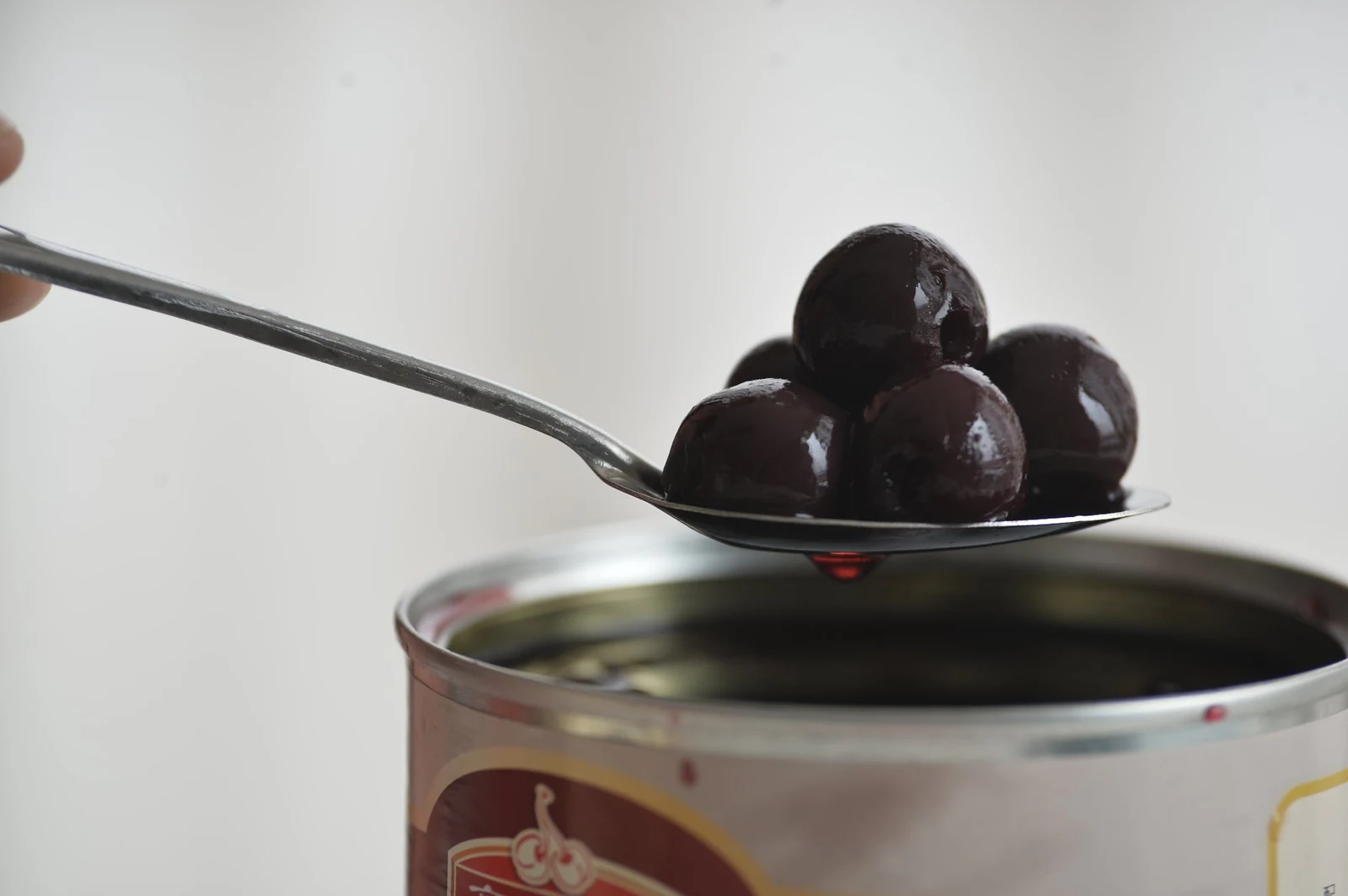
Turkey is the world’s largest cherry producer overall, and its strength is sour cherry: amarena-style products, compotes, juice concentrate and dark bakery fruit. European and Middle Eastern food factories draw heavily on Turkish supply. If your product brief calls for dark, tangy processed fruit, Turkey is one of the first places to look.
On freight: Turkey sits at the crossroads of its own markets. Deliveries into Europe and the Gulf are short hauls by truck or feeder vessel, so Turkish suppliers can be very competitive close to home. The equation changes as you move east — containers to East Asia take four to five weeks by sea, and freight per kilo climbs accordingly.
United States — buy here for the original maraschino tradition
The US pairs Michigan’s tart cherry industry with the sweet cherry orchards of the Pacific Northwest. This is where the modern maraschino cherry was invented — the bright red, firm cherry developed in Oregon around light-fleshed Royal Ann fruit in the early 1900s. American processors remain technically excellent; the trade-off is a high cost base. Buyers who need US-origin fruit, or want the American processing standard, buy here.
On freight: American processed cherries reach Asia by trans-Pacific container in roughly three to four weeks, and reach Europe’s east-coast ports in similar time. The distances are simply long, which shows up in both lead time and landed cost.
China — buy here for maraschino, syrup and glacé at scale
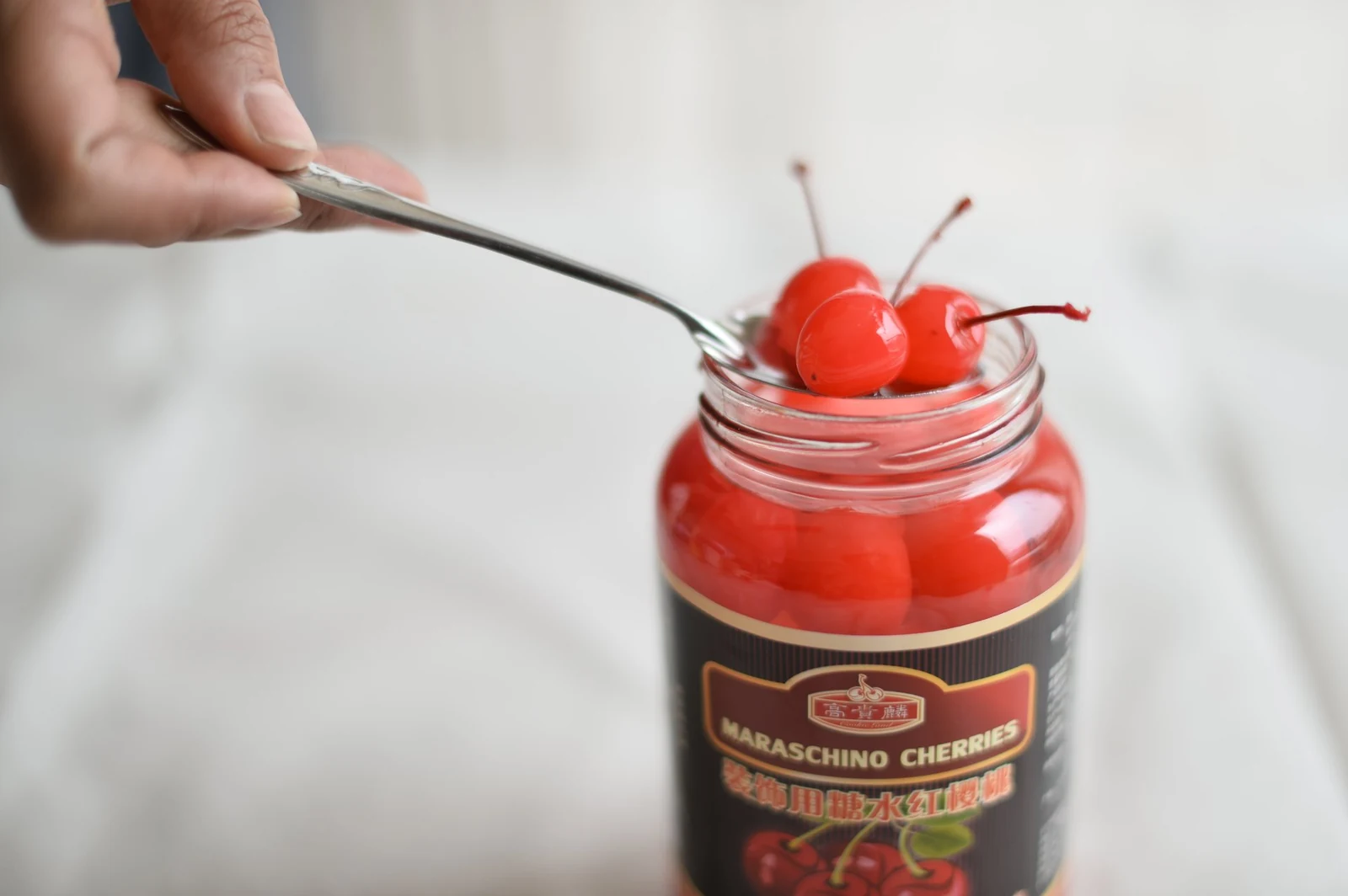
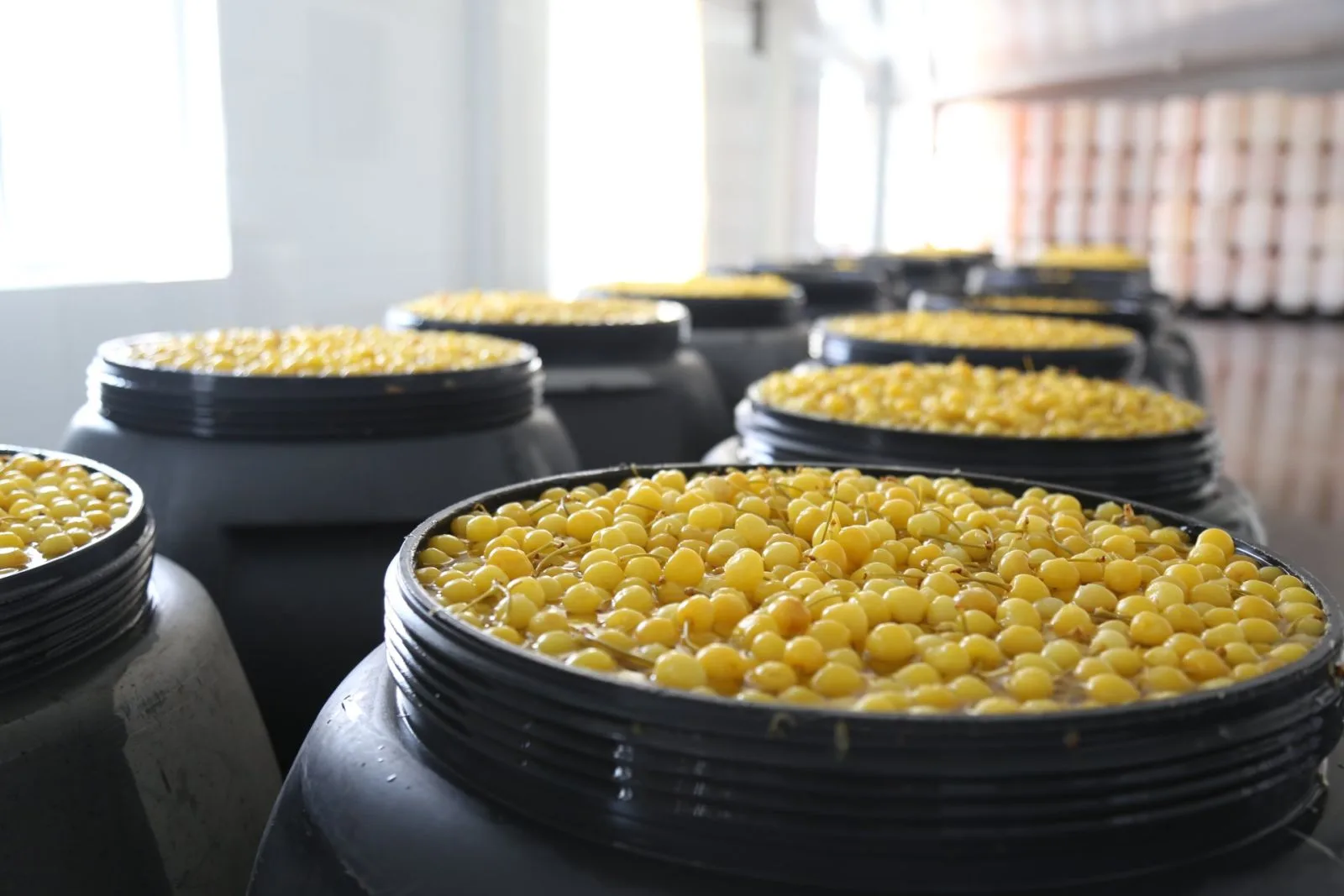
China’s cherry production has grown enormously over two decades — Yantai in Shandong is the name every Chinese grower trades on — and the processing industry grew up alongside it. Brining lines, maraschino lines, glacé lines and canning capacity are concentrated in Shandong, close to both the orchards and major export ports. For buyers of maraschino cherries, cherries in syrup and brined cherries, China is today one of the main sourcing origins worldwide: industrial-scale capacity, a complete processing chain, and dense shipping lanes.
On freight: this is where Shandong’s coastal location pays off. Container services run from Qingdao and nearby ports to most of Asia and the Middle East weekly — one to two weeks to ports across East, Southeast and South Asia, two to three weeks to the Gulf and Red Sea, and under four weeks to Europe. High sailing frequency means small and large orders alike can slot into regular sailings instead of waiting for a monthly departure.
Poland and Eastern Europe — buy here for European sour cherry supply
Poland and its neighbors harvest substantial sour cherry volumes, feeding the European food industry with juices, preserves, bakery fruit and dairy ingredients. For a buyer inside the EU, it’s a natural near-shore source: reliable volumes, EU food-safety frameworks, and truck-distance delivery across the continent. Buyers outside Europe, though, are effectively buying an export product — the same long-haul economics as anywhere else apply.
Chile — not the place for processed supply
Chile is almost purely a fresh-cherry story, built on counter-season exports to the northern hemisphere’s winter. It’s an impressive logistics operation — Chilean fresh cherries cross the Pacific in three to five weeks under heavy cold-chain investment — but very little Chilean fruit enters processing channels, so processed-cherry buyers rarely source here.
So who should buy Chinese cherries?
Every origin has a natural customer base. For China, it comes down to three profiles:
- Buyers across Asia and the Middle East. From Shandong, a container reaches ports from Osaka to Mumbai to Jebel Ali in one to three weeks. Shorter transit means lower freight per kilo, faster reorder cycles and less capital tied up on the water. For a factory in, say, Seoul, Manila or Dubai, Chinese supply is the closest industrial-scale option — often the only one with weekly sailings.
- Cost-competitive food manufacturers. Where your product needs to hit a price point — retail jars, bakery lines, foodservice packs — China’s combination of processing scale and short inbound freight is hard to beat.
- Buyers who need volume, year-round. Shandong’s brined stock and frozen fruit keep lines running through the off-season, and the industry’s capacity means large repeat orders don’t require waiting lists.
For buyers across Asia and the Middle East, China is very likely the first choice. For buyers elsewhere, the cost advantage and everything else Chinese processors bring to the table still make Chinese cherries worth a place on your shortlist.
The short version: match the product to the origin
| You’re buying | Sensible origins to approach |
|---|---|
| Maraschino cherries (red, green, stem-on/off) | China, United States |
| Cherries in syrup / glacé cherries | China |
| Brined cherries for further processing | China, Turkey |
| Sour cherry compote, concentrate, dark bakery fruit | Turkey, Poland, United States |
| Fresh cherries (counter-season) | Chile |
No origin is “best” across the board — each earned its reputation on a specific product category. The efficient way to source is to work backwards from what you’re buying and where you are, then shortlist the origins that specialize in both.
We process maraschino cherries, cherries in syrup and brined cherries in Yantai, Shandong — orchards, processing lines and weekly export sailings within a few kilometers of each other.
Cherries on your sourcing list? View our maraschino cherries or ask us about supply — we’ll tell you straight whether we fit your purchase.