Yunheng Foods
If you buy fruit products for a bakery, you’ve probably sent out a request for quotation that said something like “strawberry jam, 5kg pails” — and received offers back ranging from $0.90 to $3.20 per kilo.
That price spread isn’t suppliers being random. It’s because “jam” means different things to different factories, and you may have been quoted three completely different products.
Here’s how we’d explain it if you visited our factory in Yantai, because this confusion costs buyers money every week.
Jam: cooked fruit, preserved, not built for ovens
Jam is what most people think of when they hear the word. Fruit, sugar, pectin, cooked down, set into a spreadable gel. It’s made to sit on bread at room temperature.
The key thing to understand: jam is engineered to hold together in the jar. Nobody expects it to survive 30 minutes at 180°C. If you bake jam inside a pastry, two things happen — the pectin gel breaks down and turns watery, and the sugar caramelises and darkens far past the colour you approved from the sample.
This is why the cheapest quote you got might actually be a jam-grade product. It’s a legitimate product. It’s just not built for what you’re doing with it.
Fruit filling: built for heat, priced for heat
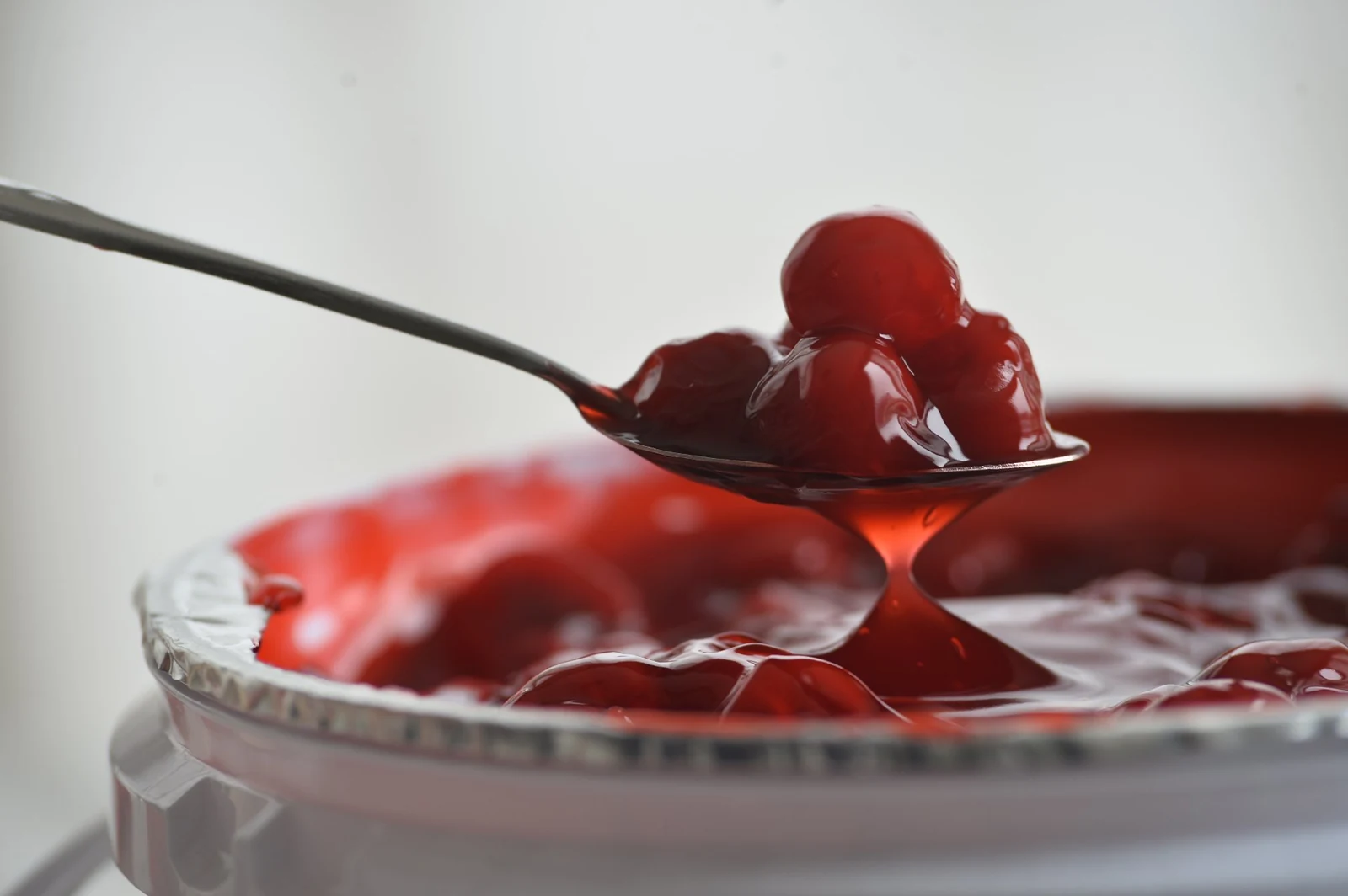
A bakery fruit filling (some buyers call this “compote” or “bakery jam”) is formulated differently from day one. Instead of relying on pectin to set, it uses a starch system — usually a modified starch chosen specifically for freeze-thaw stability and heat tolerance.
What that changes in practice:
- It doesn’t boil out. The filling holds its body while the surrounding dough bakes, so it stays inside the pastry instead of running onto your tray.
- It doesn’t weep after freezing. Standard jams separate when frozen and thawed. A properly built filling keeps its gel through a freeze-thaw cycle, which matters if your product goes from your factory to a freezer to a chiller cabinet.
- It stays put on the shelf. Baked goods sit in display cabinets for days. A filling with the right starch system won’t bleed moisture into the dough and turn your crust soggy.
You pay more for this than for jam-grade product, because the raw materials and the formulation work cost more. But compare it to the cost of a customer complaint batch, and the math is easy.
Pie filling: a subset, not a synonym
“Pie filling” isn’t a different technology — it’s fruit filling formulated for a specific job: high fruit visibility, sliceable when set, thick enough to hold a clean cut when the pie is served cold or reheated.
The naming gets messy because American buyers say “pie filling” for everything, European buyers often say “compote” or “bakery filling,” and Asian buyers frequently just say “filling” or use the local term. When we quote a project, we don’t care much what you call it. We care about the four specs that define it.
The four specs that actually matter
Skip the terminology debate. When you ask for a quote, give the supplier these four things and you’ll get an accurate price, first round:
1. Brix (sugar content). Typical bakery fillings run 45–55 Brix. Lower Brix means more real fruit taste but shorter shelf life and usually higher cost per kg of fruit. Higher Brix is cheaper and lasts longer but reads as “sweet” rather than “fruity.”
2. Fruit content. This is the number least often written down and most often disputed later. 20% strawberry and 50% strawberry are both sold as “strawberry filling.” Insist the percentage goes in the specification sheet and on the COA.
3. Fruit form. Whole fruit, sliced, diced, or purée. This drives price more than almost anything else, and it changes how the filling behaves on your line — a pumpable diced filling and a sliceable whole-fruit filling are different products.
4. How the baked product will be treated. Baked then frozen? Sold fresh in a chiller cabinet? Sitting on a shelf at ambient? Each of these needs a different starch system, and a supplier who doesn’t ask you this question is going to sell you what they have in stock.
A practical way to qualify a new supplier
Ask for a sample, then do the same bake test you’d do for any new ingredient — but make it a worst case bake test. Use your longest bake time, your hottest oven zone, and if your product is frozen, freeze and thaw the filled product before baking. Any filling looks fine in a friendly test. The differences show up at the edges of your process.
Then hold the baked product for a few days at room temperature before you taste it. Weepage and sogginess often appear on day two or three, not on day one.
If a supplier can’t give you a Brix number, a fruit percentage, and a straight answer about which starch system they’re using, that tells you something too.
We manufacture oven-stable fruit fillings and cherry products in Yantai, China, for bakery brands around the world.
Ready to compare specs? View our bakery fruit fillings or request a quote.