Yunheng Foods
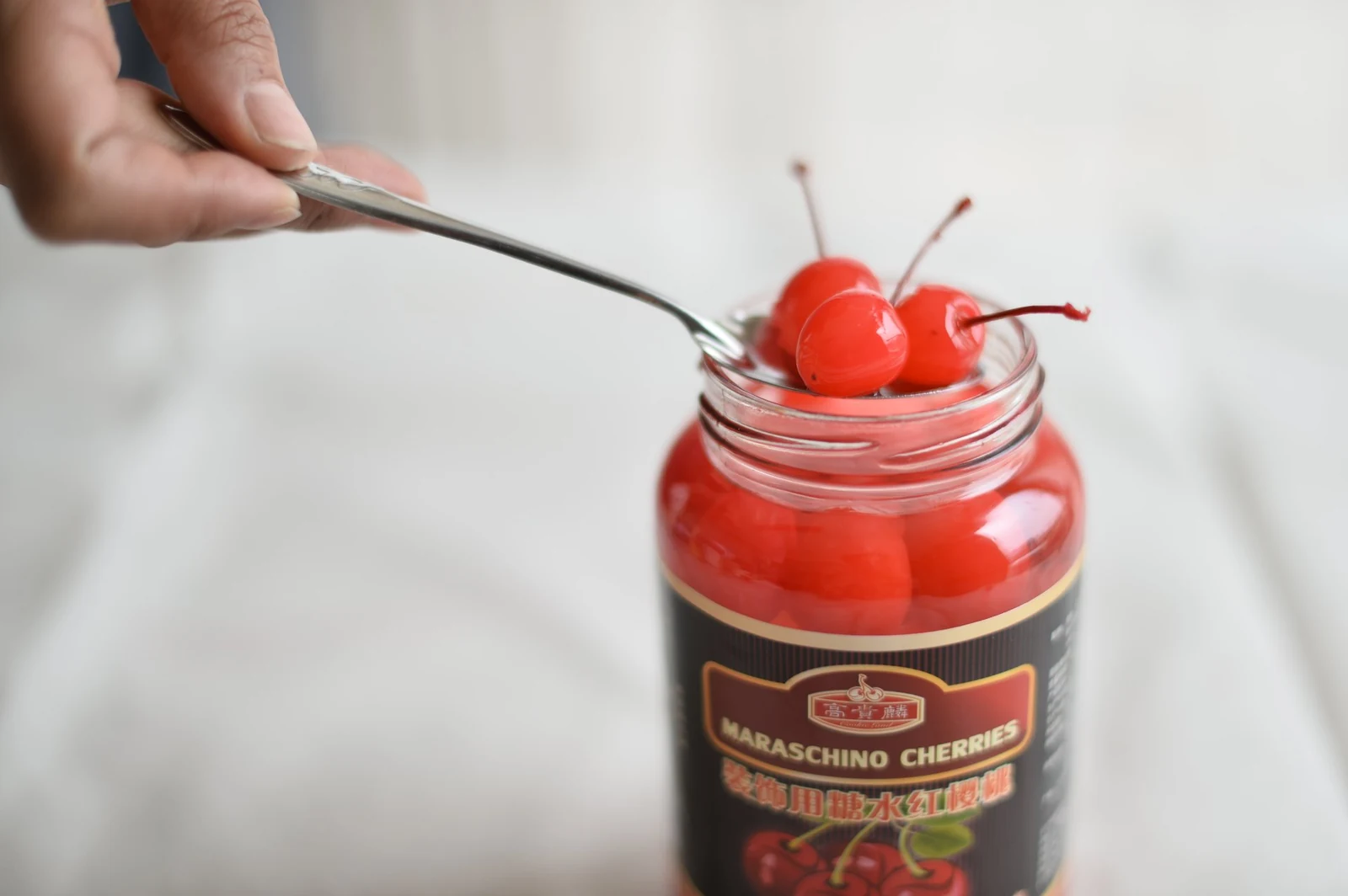
The maraschino cherry might be the most misunderstood product in the baking aisle. It looks like a cherry that’s been soaked in something red. In reality it’s a fruit that has been almost completely rebuilt — and every step of that rebuild is a decision that ends up in your spec sheet, your price, and your customer’s experience.
We run this process at industrial scale in Yantai. Here’s what actually happens, stage by stage, and what a buyer should ask about at each point.
Step 1: The fruit
Maraschino production starts with firm, light-fleshed cherry varieties — not the dark sweet cherries sold fresh. Firmness matters because the fruit has to survive weeks of processing and still hold a shape. Harvest is concentrated in a short summer window, which is why cherry processors work with frozen fruit, brined stock, or a mix of both across the rest of the year.
What this means for you: a factory that controls or has long-term contracts on raw fruit can hold quality steady between seasons. A factory buying spot-market fruit will have batch variation. Ask where their fruit comes from, and how far ahead they book it.
Step 2: Brining — the step nobody outside the industry knows about
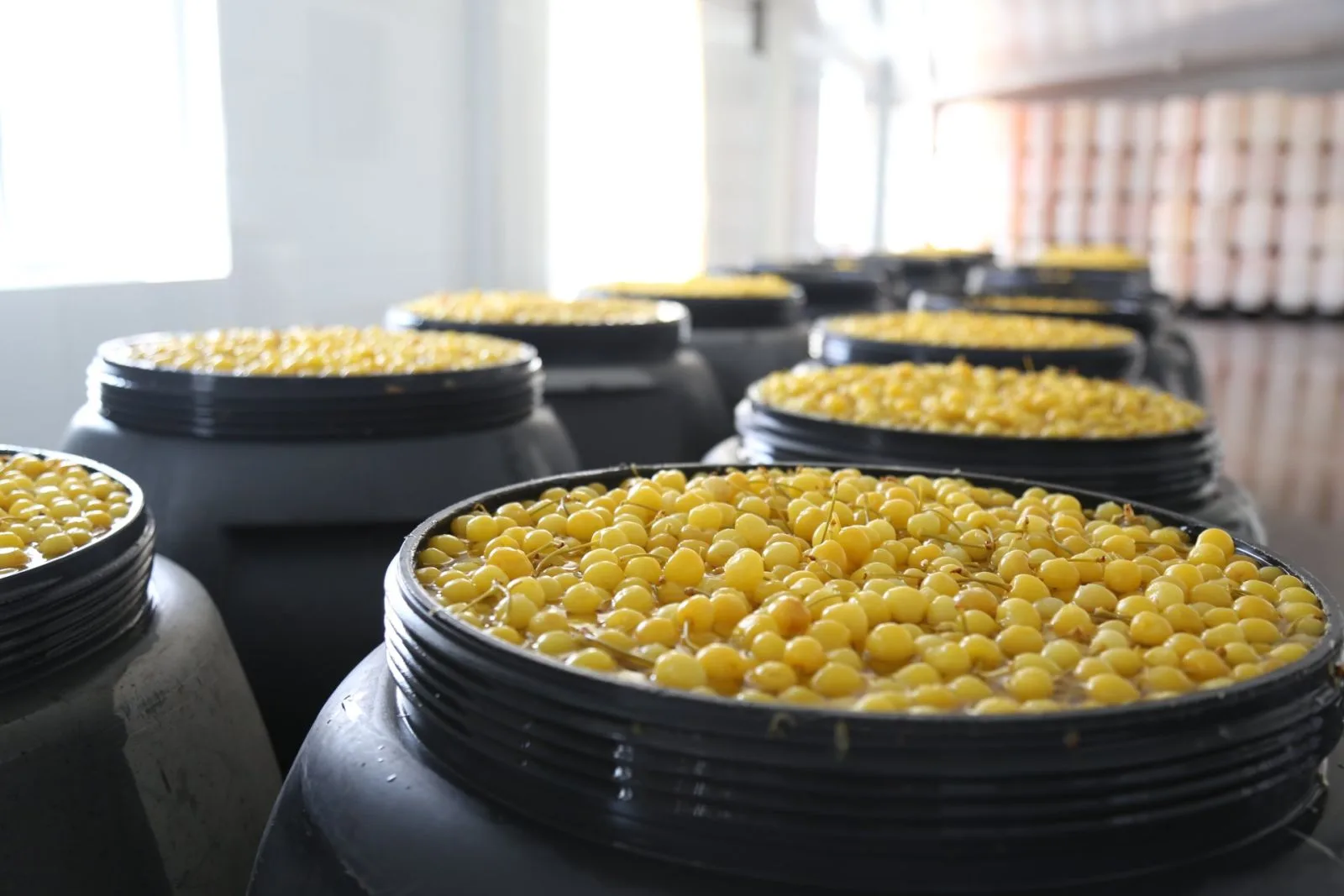
Fresh cherries are washed, stemmed as needed, and placed into a brine — historically a solution of sulfur dioxide and salt. Over several weeks, the brine does two things: it bleaches the fruit from red to a pale straw color, and it firms the flesh by changing how the fruit’s cell structure holds water.
This sounds destructive, and chemically it is. But it’s what makes the rest possible. A bleached, firmed cherry is a blank canvas: it will accept color evenly, absorb syrup without collapsing, and survive pasteurization, freezing and months of storage. Without brining, you’d get a soft, unevenly colored product with a fraction of the shelf life.
The brined cherry that comes out of this stage is itself a tradable product — that’s the “brined cherries” line in our catalogue. It’s a raw material for other processors, which is why you’ll rarely see it in retail.
Step 3: Leaching and pitting
Brined cherries are rinsed and soaked in clean water to draw out the brine. This stage has to be thorough — leftover sulfur affects both flavor and the certification paperwork. Then the fruit is pitted (for stemless product) or left whole (for stemmed), usually by machine, with hand inspection on the line.
For buyers, the number that matters here is pit removal rate. No mechanical pitting line is perfect; a realistic industrial line runs well above 99% but nobody honest claims 100%. If your application is ice cream or yogurt where a hidden pit is a genuine hazard claim, ask what the supplier guarantees and what inspection method backs the guarantee.
Step 4: Syruping — where color, flavor and texture are decided
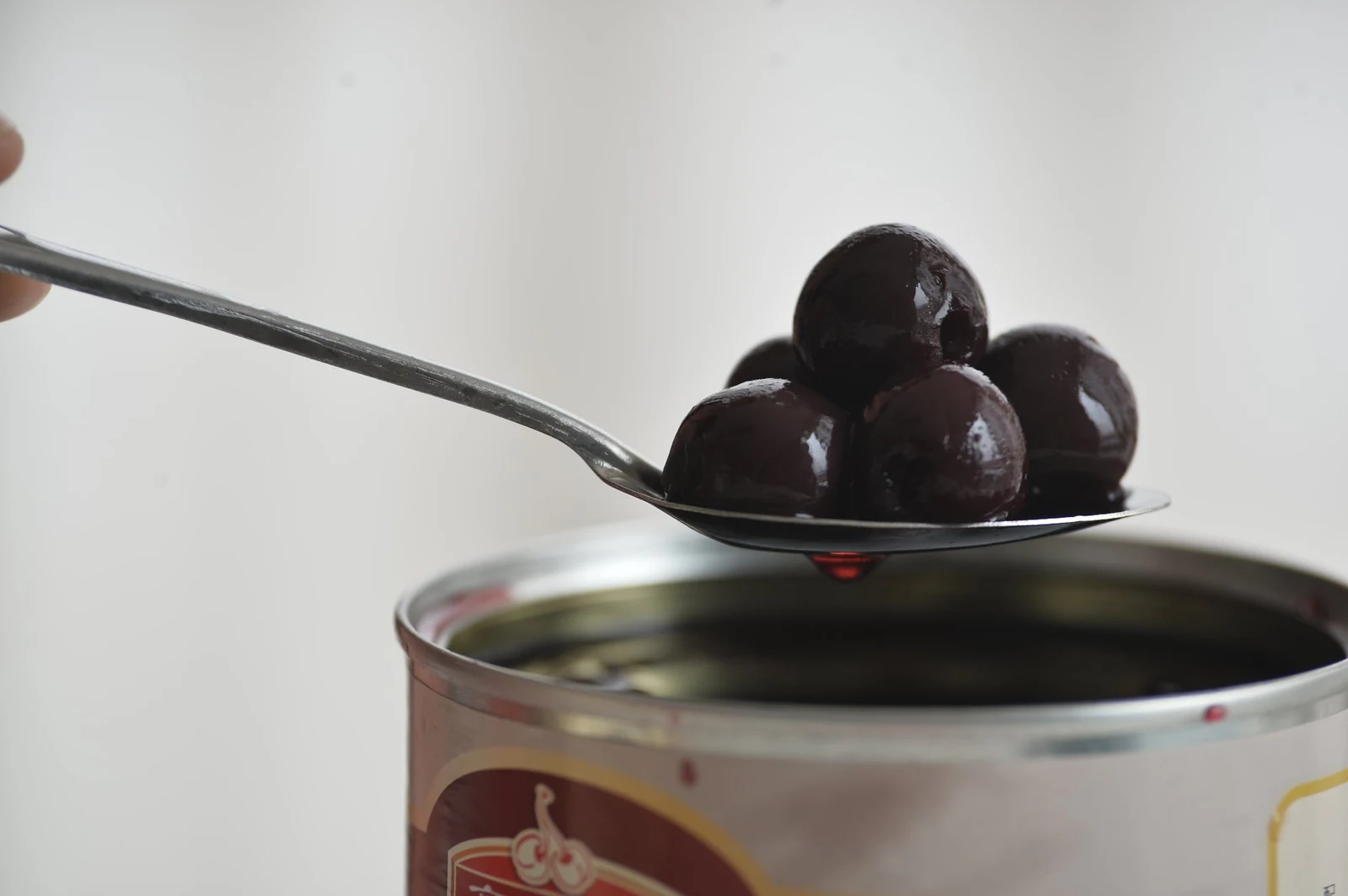
The pale, firm cherries now go into sugar syrup, in stages: the syrup concentration is increased gradually so the fruit absorbs sugar without shrinking or wrinkling. Food coloring and flavor are added here, along with citric acid to balance the sweetness.
This is the step where suppliers differentiate themselves, and where your spec sheet does the most work:
- Colorant. Carmine (insect-derived, not suitable for vegan claims, restricted in some markets), Allura Red, ponceau and others all behave differently — in heat, in light, in acidic applications like drinks. The “right” one depends on your market’s labeling rules and your application.
- Firmness. Syrup formulation and processing time control whether the final cherry has bite or yields softly. Cocktail cherries and bakery cherries want different firmness.
- Brix of the syrup. Higher Brix preserves longer and tastes sweeter; it also changes the weight you’re paying for — you’re buying cherry plus syrup.
Step 5: Packing and pasteurization
Finished cherries are packed into jars, tins or pails with the syrup, then pasteurized for shelf stability. Pack format matters more than buyers expect: retail jars, catering tins and 10kg+ pails behave differently in distribution, and a product formulated for a small jar isn’t automatically right for a big pail that gets opened and used over weeks.
What the process explains about the product
Once you’ve seen the pipeline, several things buyers commonly wonder about answer themselves:
- Why maraschino cherries all look so uniform — the brining and syruping processes equalize color and texture in a way fresh fruit never is.
- Why they keep so long — sugar, pasteurization and the brining-derived structure.
- Why they don’t taste much like fresh cherries — the original flavor compounds largely left with the brine and were replaced by added flavor.
- Why “with stem” and “stemless” are priced differently — stemmed fruit skips pitting but requires careful stem retention; stemless requires near-perfect pitting.
The process is a century old at this point and hasn’t fundamentally changed. What separates a good supplier from a mediocre one is control: consistent fruit sourcing, tight brine and leaching management, honest inspection data, and the willingness to adjust color, firmness and syrup to the customer’s application rather than selling one standard product to everyone.
We manufacture maraschino cherries, cherries in syrup and brined cherries in Yantai, China — from raw fruit sourcing through to finished packs for bakery, dessert and beverage brands.
Planning a cherry product? View our maraschino cherries or talk to us about your application.